I have the fertility world’s version of Oprah on today’s show. Dr. Domar wrote Conquering Infertility, one of the most important Mind/Body books that you can buy if you’re going through infertility.
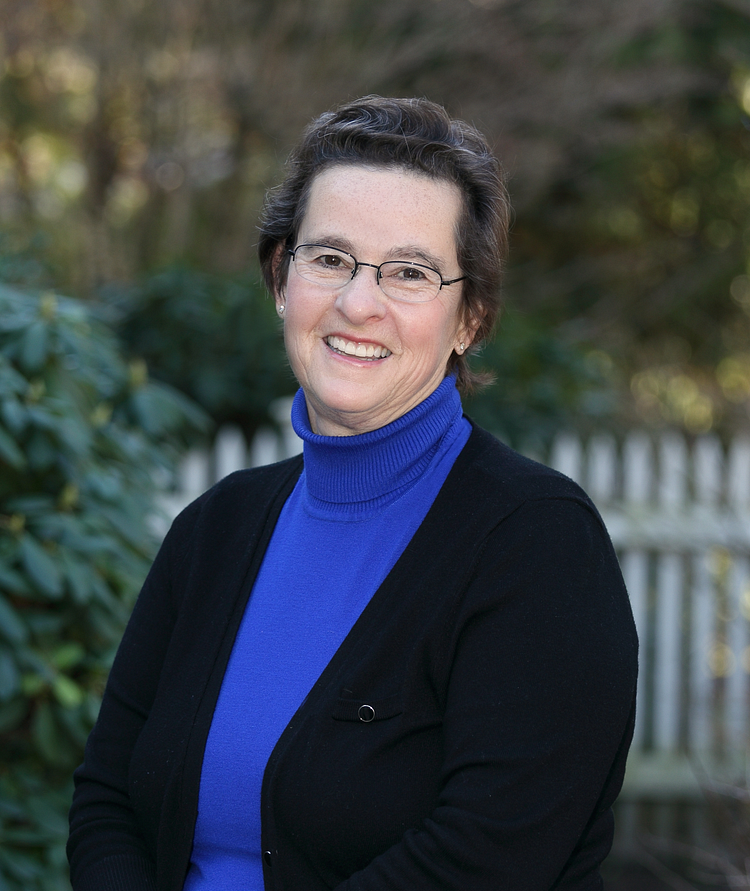
Dr. Alice Domar is currently the Chief Compassion Officer at Inception, an associate professor in obstetrics, gynecology, and reproductive biology, part-time, at Harvard Medical School, and a senior staff psychologist at Beth Israel Deaconess Medical Center.She established the first ever Mind/Body Center for women’s health, as well as the very first Mind/Body program for fertility in 1987.
Dr. Aimee: Welcome, Dr. Alice Domar. I’m so glad to be interviewing you.
Dr. Alice Domar: It’s my pleasure. You and I have known each other for a long time, since you were in school.
Dr. Aimee: I know. I’m always in awe of you. We have so much to talk about. Before we get into some of the new things, let’s do a quick overview of the basis of your amazing work. Tell us a bit about the mind/body connection and how it impacts fertility and your work in this field.
Dr. Alice Domar: Do we have two or three days?
Dr. Aimee: I wish. I would love to sit and listen to you for two or three days.
Dr. Alice Domar: It’s funny, I was just writing a rebuttal to someone who wrote about stress and infertility, and I realized that my interest in the field came before I was born, because it took my parents seven years to conceive my sister. The reason my mom attributed to getting pregnant was they gave her the 1950s version of valium. She took whatever that was in those days and, boom, along came my sister. Then I came five years later.
In my family, growing up it was like oh yeah, stress causes infertility, because my mom took valium and got pregnant. I think I’ve always been interested in the stress and fertility connection, and then I got my PhD in health psychology and majored in OBGYN. It just felt like an unanswered question, “Does stress cause infertility or does infertility cause stress?” I’m a dinosaur, I’ve been doing this for 34 years now.
Dr. Aimee: Wow. That’s great. So, what is the answer?
Dr. Alice Domar: The answer is infertility causes a huge amount of stress. I published a paper back 20 or 25 years ago that showed that women with infertility had the same level of anxiety and depression as did women with cancer, AIDS, or heart disease. That confirmed everything that I knew from talking to patients every day, but it was a really good thing for my patients to tell their bosses, their mothers-in-law, and everyone else to say, “See, this is really bad.”
Then last Spring, some of our fellows and I decided to do a study to look at the psychological impact of COVID on our patients. It was me and a group of male physicians. We started off with me saying for our patients, even during the surge in Boston — and Boston had a really bad surge last Spring, infertility is going to be worse. Everyone was like, “There’s no way. COVID is so stressful, we’re all locked up, it’s a pandemic.” I said, no, I think for our patients, infertility will be worse.
I was right. We just published the paper. For our patients, infertility is so hard that even a global pandemic doesn’t outdo the impact.
If you think about it, infertility is unlike any other disease. I use the word disease deliberately, because the World Health Organization has classified infertility as a disease. It affects your relationship with your partner, it affects your sex life, it affects your relationship with your family and your friends, and your job, and your financial security, and your relationship with God, and your sense of being a female person or a male person, and self-esteem.
On top of all of it, you’re blamed. Just think of what every patient in the world is told, “Just relax and you’ll get pregnant.” Would you ever say that to a cancer patient? “Just relax and your cancer will go away.” No.
It’s so clear that infertility causes a very high level of stress.

Dr. Aimee: Yes. In your research, what do you find that could be good ways to support patients, things that could reduce stress during fertility treatment and reduce the burden of treatment for them?
Dr. Alice Domar: That’s also what I’ve been spending my dinosaur years working on. We opened the Mind/Body Program for Infertility in 1987 and there are thousands of women who have gone through it, I’ve trained people around the world, and have done with the actual group program two large randomized control trials. We just did a trial last year on an online version.
What we found with a randomized controlled trial is that women who do the Mind/Body Program for Infertility are less depressed, less anxious, less lonely. Physical symptoms get better, like insomnia gets better, headaches get better. The pregnancy rates go up at least double.
Dr. Aimee: Wow.
Dr. Alice Domar: Everyone always says, “What comes first, infertility or stress?” I think it’s very clear that infertility causes a lot of stress, but I think what’s just about as clear is if you can reduce the stress level of infertility patients, they’re more likely to get pregnant.
Dr. Aimee: As a doctor, how can I do that, what kinds of things can I suggest for them?
Dr. Alice Domar: If you look at my career and all the things that I’ve focused on, you have to be all about interventions. Doing research in interventions, doing these large randomized controlled trials, and then I spent about five years trying to figure out why patients drop out of treatment. Now my entire focus is on working with physicians, nurses, and support staff, this whole concept of patient-centered care. How can you change how the clinic is, and maybe more specifically how can you change how we communicate with our patients?

I actually just did a study with one of our fellows on the impact of empathic communication. We’re launching a huge study on better ways to break bad news to our patients.
I think that I went from treating one patient at a time, either individually or in a group, and now I’m at the point of — and this is what I actually said at the start of a fellows retreat last Summer — I want us all, everybody in our field worldwide, to stop treating patients and I want us to start caring for patients. Our patients are anxious and depressed and lonely, and the whole world is getting pregnant.
If I hear one more person say to one of my patients, “I don’t even know how it happened, it was the first month.” My patients don’t need to know how easy it was to get pregnant. My patients don’t need to know that. It’s like saying to somebody on the street who is homeless, “I just bought my fourth house.” Why do you need to say that? I don’t want to know how many times you had sex. I don’t want to know what position you used. My patients sure don’t.
I think we all need to change the way we care for patients. I think one of those is to communicate empathically, to understand where the patients are coming from. As I said, if you look at the data in other fields, it’s really easy to do. That’s what I’m focusing on now. I’ve been trying to teach providers, but I also realized a number of years ago that patients need skills. If you train 10 therapists and 10 therapists see those patients, you’re going to have a very small number of people who are learning the skills.

Dr. Aimee: Right. You’ve rolled out a program that offers support for fertility patients. Can you tell us a little bit more about the program?
Dr. Alice Domar: Yes. Fertility Rescripted is a new startup out of Colorado. Abby Mercado is the CEO. She very freely says, she was an IVF patient and found it to be extremely stressful. There were no resources where she lived. I don’t want to put words in her mouth, but I think she was pretty desperate to have some tools and strategies.
Dr. Aimee: Wow. Is it open right now for people?
Dr. Alice Domar: One of the other side effects of the pandemic. Therapists are still flat out. I know for me since the pandemic started, I’ve more than doubled my patient load. We have a waiting list at Boston IVF for people to get therapy. I’ve been there almost 19 years and we’ve never had a waiting list before. We’re having a harder time finding therapists who have the availability to add something.
I’ve been speaking to a lot of infertility doctors about this. What we’re hearing over and over again is, “Our patients are really distressed. We in our clinic don’t have the resources to give them all the skills they need.” The physicians and nurses are so busy, not just that they don’t have the training, but they don’t have the time to spend with patients. This is a way to do that virtual.
We’ve been running the Mind/Body Program virtually for a year at Boston IVF and it’s been just as successful, so we know, especially with people in their 30s and 40s, how comfortable all of us have had to be virtually. Doing a virtual program should be just as effective, and we know it’s just as effective.
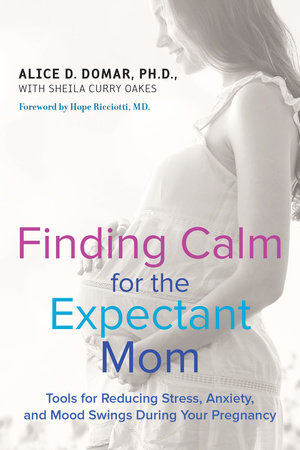
Dr. Aimee: Right. Cool. You also have written one of my favorite books that I refer to every single one of my patients, that is Finding Calm for the Expectant Mom. My patients appreciate it so much. If you guys are listening to this, and you’re hopefully going to be pregnant soon, and you find yourself anxious and worried, Alice’s book can really help you through this really tough time. It seems kind of counterintuitive when you’re finally there, but I find that people’s anxiety goes up. Can you tell us a little bit about that book?
Dr. Alice Domar: Yes. It’s funny because you’d think since I’ve been doing reproductive medicine for 33 years that my focus would entirely be on my patients who either had infertility or pregnancy loss, but once a therapist establishes a relationship with a patient during infertility, you don’t want them to have to leave once they get pregnant. I literally am still seeing a patient and her IVF baby is now 17. I see a lot of patients through their pregnancies.
I think it would be shocking to so many people, and I don’t want to offend anybody listening, that when you’re going through infertility your entire focus is that positive pregnancy test, or if you’ve had a pregnancy loss, it’s on that first prenatal ultrasound showing a good heartbeat and everything else. I think people going through infertility feel that if they have a positive pregnancy test and then maybe another one two days later which showed a doubling of their beta and they have a good ultrasound, they feel then they’ll be singing on the roof, buying maternity clothes at eight-weeks. But, at least in my experience, people get more anxious once they’re pregnant. Probably until they feel the baby move at about 20-weeks, that first 20 weeks can be really hard.
When someone is going through infertility, they’re seeing you a lot, they’re seeing your nurse a lot, they’re in the clinic, they’re getting tests, they’re getting bloodwork, they’re getting ultrasounds, and you get constant positive feedback. But obstetricians tend to be really chill, so a patient may be discharged from the fertility clinic at seven-weeks and may not see their OB for a month. That’s a really long time.
I wrote Finding Calm for the Expectant Mom simply because infertility patients need something post-infertility. I think a lot of my patients have said they’re in no-man’s-land, they’re not infertile anymore, but they don’t feel the same as somebody who got pregnant the first month they tried. They tend to not tell people, they tend to be very anxious going to the bathroom, they feel superstitious and don’t want to buy maternity clothes, and things like that. I wrote the book for anyone who is pregnant, but it’s really more focused on people who are highly anxious when they’re pregnant.
Dr. Aimee: For people who want to learn more about you, your practice, and buy some of your books, where can they go?
Dr. Alice Domar: I think all of the books are available on Amazon, I hope, and Barnes and Noble. The infertility book that did well and that we still use with our patients is called Conquering Infertility, and that has all of the Mind/Body skills that we teach in our groups.
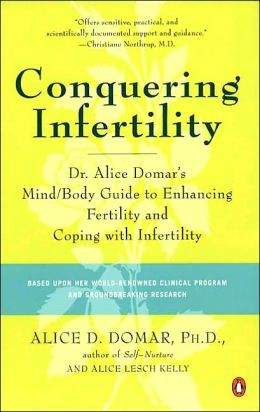
So, if someone can’t do a Mind/Body for Infertility Program, Conquering Infertility is probably half my voice and half stories from patients. We interviewed about 100 patients for the book, just so someone who is reading it can get the sense of, “Oh my god, that sounds like me. I thought I was crazy. My husband is always telling me I’m crazy. But this person sounds just like the way I’m thinking.” I feel that’s really important.
It breaks my heart that my mom went through infertility in the 1950s and it breaks my heart that people 60-something years later are still struggling the same way when they could learn skills, avail themselves of resources, and there are so many things out there that can help them feel calmer, safer, and more in control.
Dr. Aimee: Great. I literally could sit here and just listen to you talk and ask you questions all day. I want to have you on The Egg Whisperer Show all the time. I hope you’ll come on again.
Dr. Alice Domar: That’s fine. I’m always happy to do that.
Dr. Aimee: Thank you for everything that you’re doing for patients and doctors. You truly single-handedly created a revolution when you started your Mind/Body program. I feel really special whenever I tell someone, “I know her, we’re friends.”
Dr. Alice Domar: I still remember when I first met you. I think you were in med school. You said, “I want to be an infertility specialist.” I’m like, “How could you know this? You’re like a second year.” I think we did a research study together. Didn’t we?
Dr. Aimee: Yes, we did.
Dr. Alice Domar: How can you know as a second or third year med student. You were like, “I want to be.” Look at you now. You’re one of the most famous infertility specialists in the country. Well done.
Dr. Aimee: Thank you. I just love it. Thank you for everything.
Dr. Alice Domar: It’s a pleasure. Thanks for inviting me.
Catch more of me and topics like this through The Egg Whisperer Show. Episodes are aired on YouTube, Facebook, Twitter, IGTV and Apple Podcasts . Sign up to get my newsletter. Tune in to The Egg Whisperer Show on YouTube. and Sign up for The Egg Whisperer School.